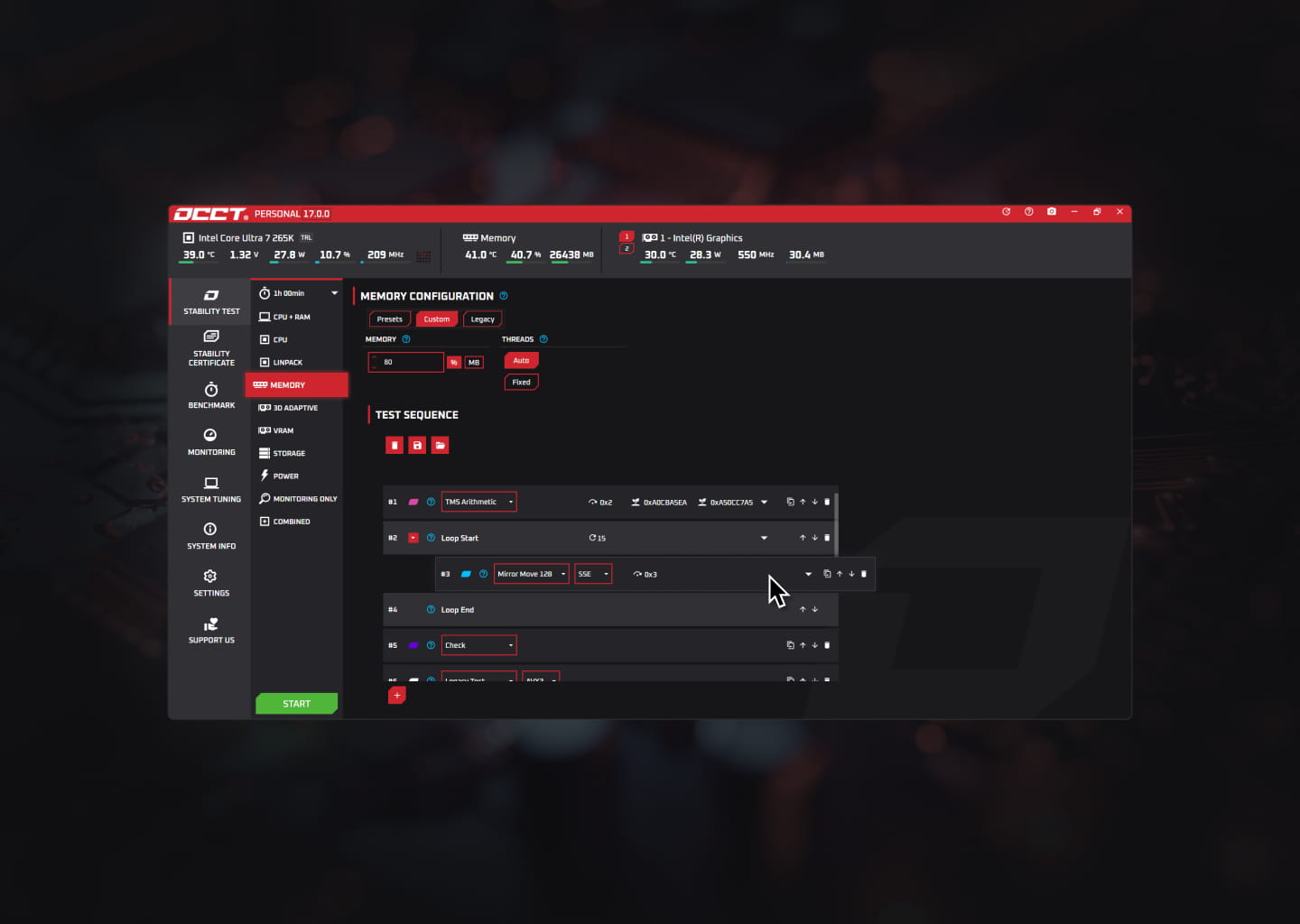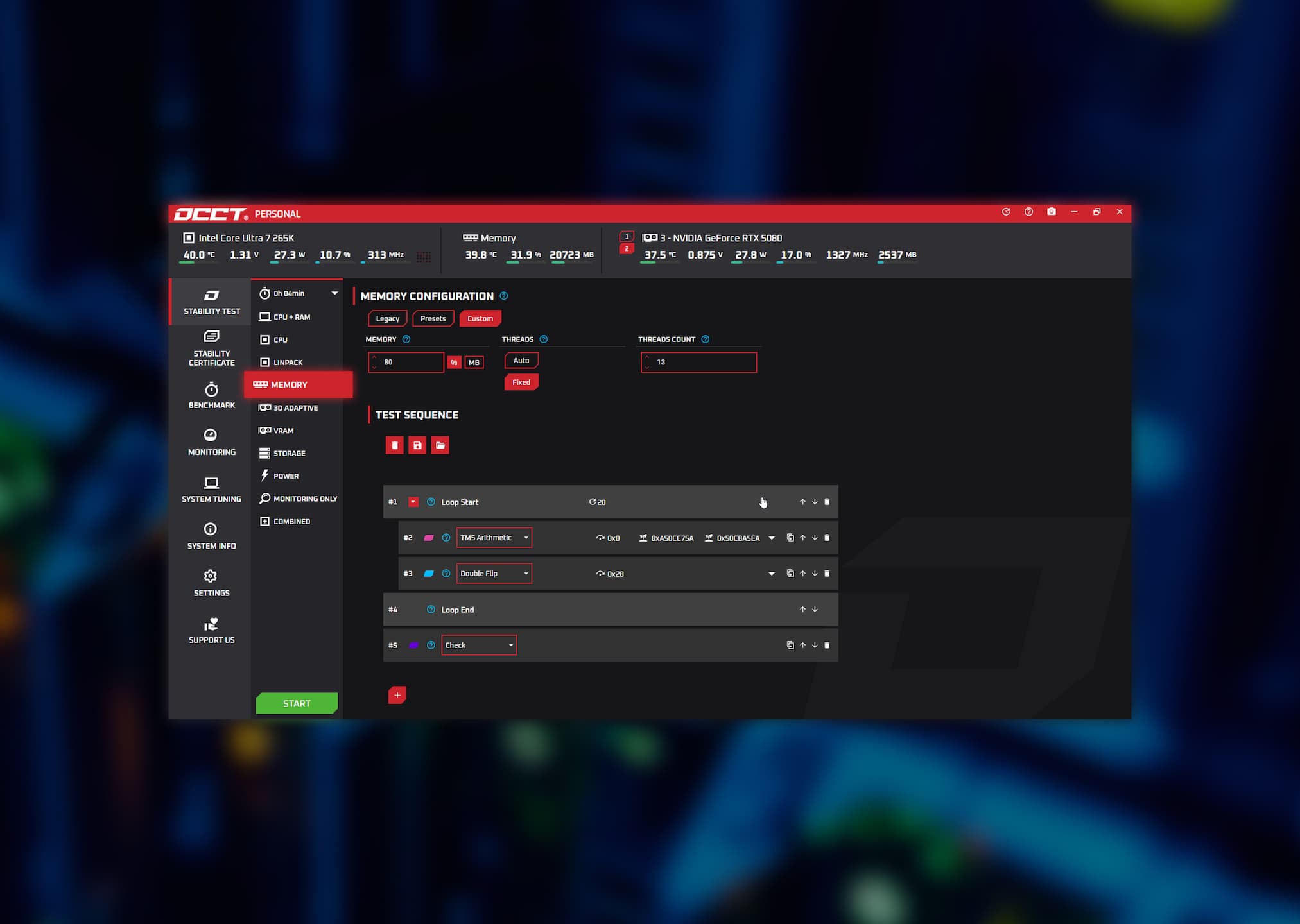
OCCT v17 Beta introduces a complete redesign of the Memory Test. This new version is built around a highly modular system, launching with 16 distinct blocks, including our legacy test for those who prefer a familiar approach. This is one of the most customizable memory testing solutions available today.
You now have full control over how your memory stress tests are built and executed.
A modular approach to memory testing
Traditionally, a stress test relies on predefined profiles with fixed instructions in a rigid sequence. With the new test, we wanted to go further, give you more flexibility.
We've broken down the traditional testing model into individual building blocks. Each block performs a specific function, and you can combine them to create a test tailored to your exact needs.
At launch, the beta includes 16 blocks inspired by TM5 and MemTest86. These are not reused implementations; we analyzed and rebuilt them from the ground up within OCCT.
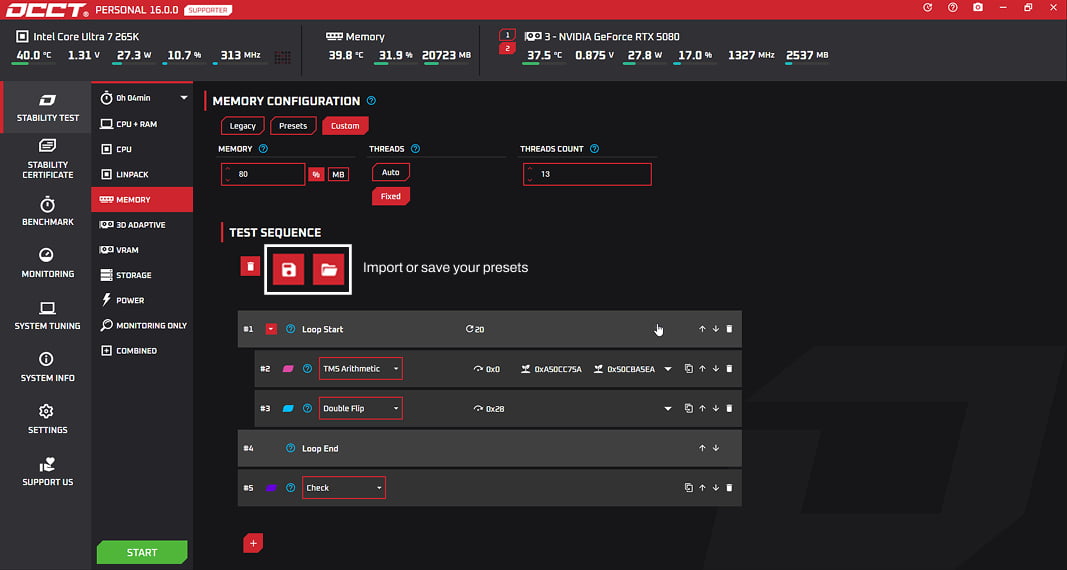
The key difference with this modular approach is that you are in full control. This design also enables you to create custom presets, save them, and share them with others.
Block categories
The 16 different blocks are organized in 5 categories:
- Non-idempotent tests – Modify the memory state by writing specific patterns.
- Idempotent tests – Move data around while preserving the initial memory state.
- Check block – Responsible for detecting errors. (Important: tests do not check for errors unless a check block is included.)
- All-in-one block – Predefined combinations of blocks, always including error checking. This category includes OCCT’s legacy memory test.
- Utility blocks - Designed to provide more flexibility, such as waiting blocks and loop blocks.
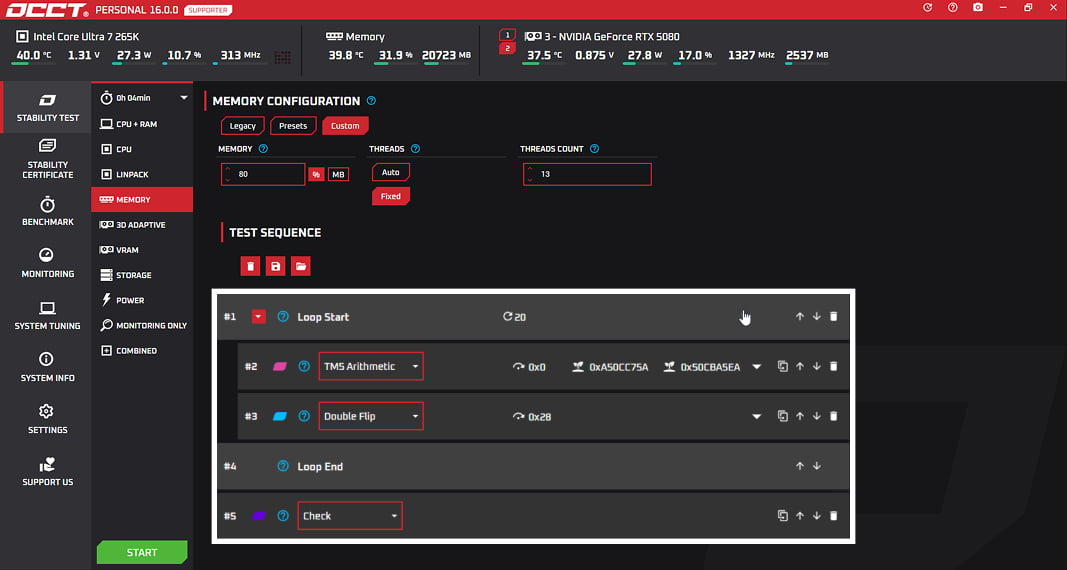
A typical test might look like this:
- Start with a non-idempotent block to write a pattern into memory
- Apply idempotent blocks and/or utility blocks to stress the data
- Finish with a check block to detect potential errors
This structure gives you precise control over both the behavior and intensity of your tests. This is just an example of what you can do, but for a deeper dive into the block system, check out the announcement video above.
Ready-to-use presets
While the modular system offers powerful customization, we know not everyone wants to build tests from scratch. That's why OCCT v17 includes:
- Built-in presets based on popular stress tests
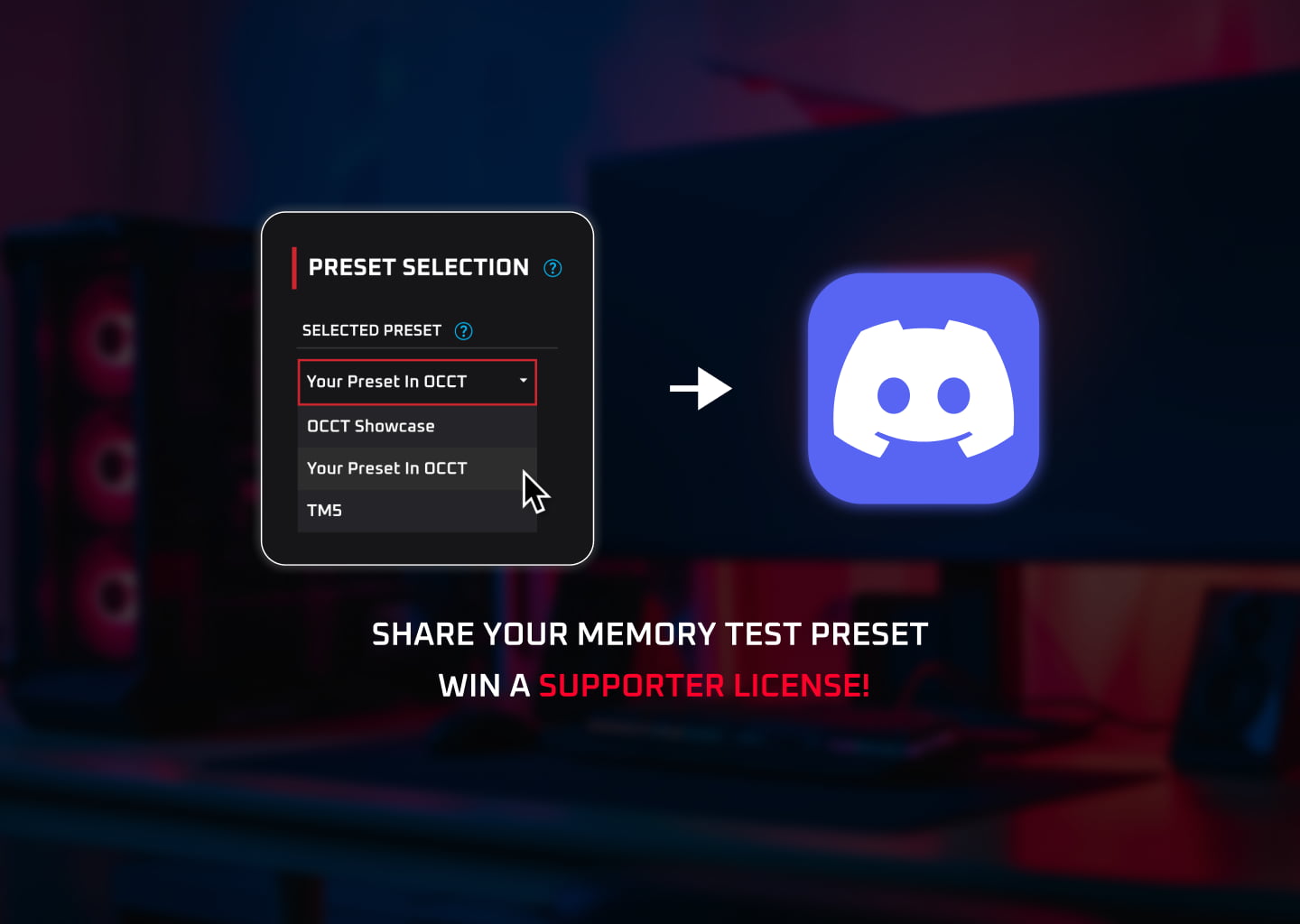
- The ability to create, save, and share your own presets
- Support for importing external tests (including TM5 configurations)
If a test you commonly use isn't included in the beta, you can easily import it—we've provided a quick guide to help you through the process.
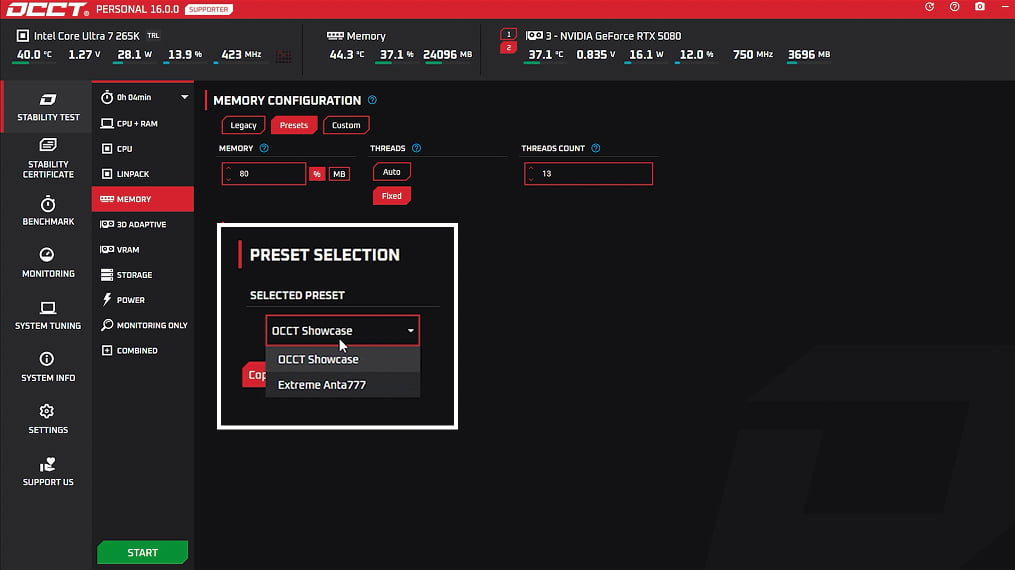
We also plan to highlight the best community-created presets. In fact, this beta already ships with its first community contribution: a preset created by Discord user Paimon.
This is a beta, your feedback matters
Given the scale of this overhaul, your feedback is essential! If you're testing the beta and have suggestions, ideas for new blocks, or improvements you'd like to see, please reach out via our support form or join the discussion on our Discord.
This means some features may evolve before the final release, and additional community presets may be included by default at launch.
The beta is available for download now (if you are a Supporter), and we look forward to hearing your thoughts!
Download OCCT v17 Beta